
Safe mole removal KL at Imperial Clinic Ampang. Doctor-led assessment and removal, with minimal downtime. Book your consultation today.
You probably know the one. Maybe it’s been there since you were a teenager and you never gave it much thought until recently. Then something shifted, maybe it looked a bit different in a photo, maybe your partner mentioned it, maybe it just started catching on your collar every single morning and you’ve had enough.
Or maybe you’ve got one that’s always bothered you, sitting somewhere visible on your face or neck, and you’ve just quietly wished it wasn’t there for years.
Whatever brought you here, you’re not overthinking it. People come to us for mole removal KL for all kinds of reasons and none of them need to be dramatic or medically urgent. Some people come because something changed and they want it checked.
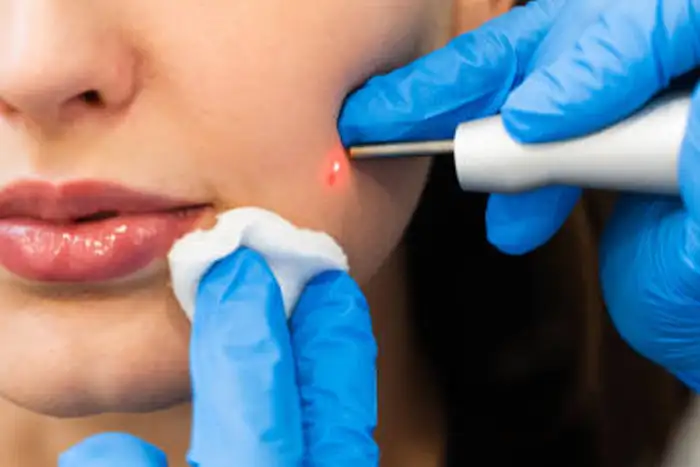
Some come because a mole is causing physical irritation every day. And plenty come simply because they don’t like the look of it and they’d rather it wasn’t there. All of those are completely valid.
What we’d say to everyone regardless of the reason is this: get it looked at properly before anything else. Moles aren’t like skin tags where you can be fairly confident about what you’re dealing with just by looking. They need a proper assessment first. That’s not us being overcautious, it’s just the right way to do this.
Most moles are completely harmless, but every mole should still be properly assessed before removal. Doctors use the ABCDE rule to look for warning signs:
A – Asymmetry: uneven shape
B – Border: irregular or blurry edges
C – Colour: multiple or unusual colours
D – Diameter: larger than about 6mm
E – Evolution: any change in size, shape, colour, bleeding, or itching
The most important sign is change over time. Most moles are benign, but checking them properly helps ensure safe treatment and early detection of anything concerning.
People choose mole removal for many different reasons, and all of them are valid. Some notice a mole changing and want peace of mind. Others are tired of constant irritation from shaving, clothing, or brushing their hair.
Some patients are referred by another doctor for removal, while others simply want to remove a visible mole they’ve always felt self-conscious about. Whether the reason is medical, practical, or cosmetic, the important thing is having it assessed and treated properly.
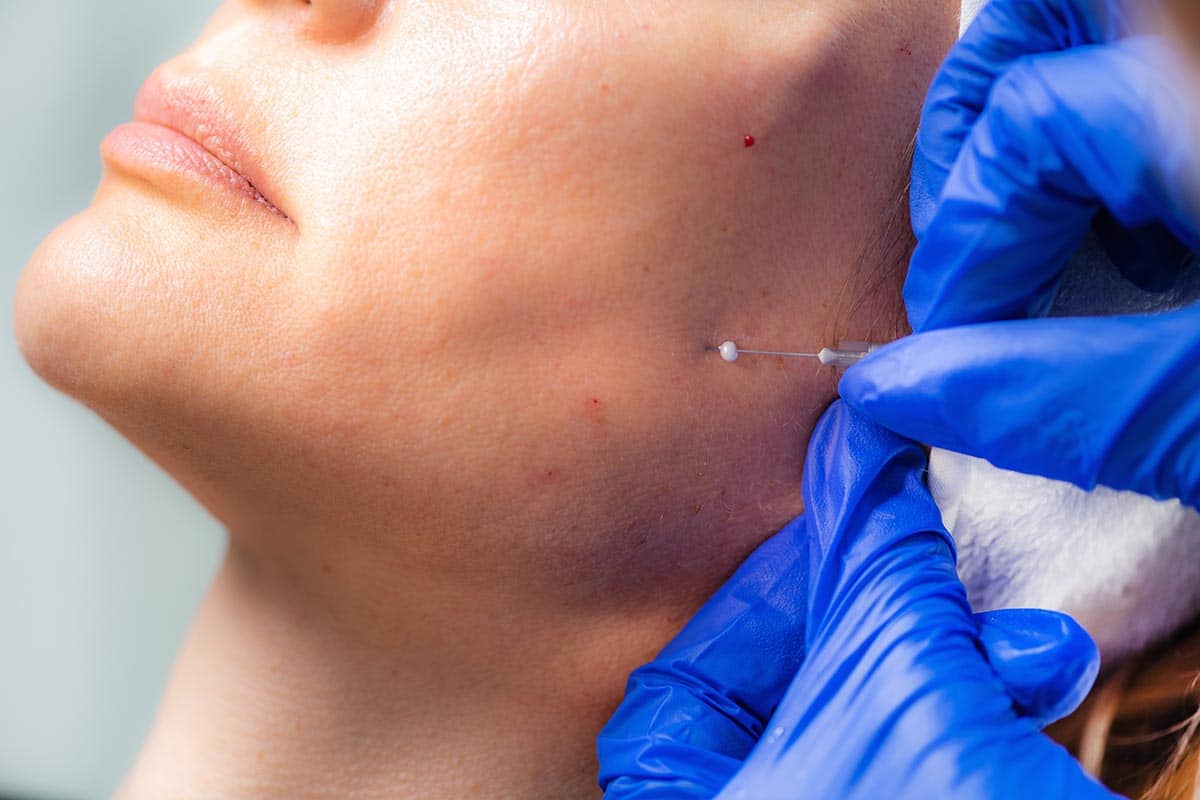
Not all moles are the same, which is why treatment is never one-size-fits-all. Some are flat and pigmented, while others are raised, rough, larger, or present since birth.
Raised moles are often the easiest to remove and commonly cause irritation from shaving, clothing, or brushing. Congenital moles are usually harmless but may need monitoring over time, especially if larger. Atypical moles with uneven borders or mixed colours also require more careful assessment before removal.
The first step is always understanding exactly what type of mole you have so the safest and most suitable approach can be chosen.
PDO threads are widely used because they have a long medical safety record and are naturally absorbed by the body over time. Different thread types serve different purposes — smooth threads improve skin quality, while barbed threads provide lifting and support.
At our clinic, every PDO thread lift is customised based on your facial structure, skin laxity, and treatment goals, rather than using the same approach for everyone.
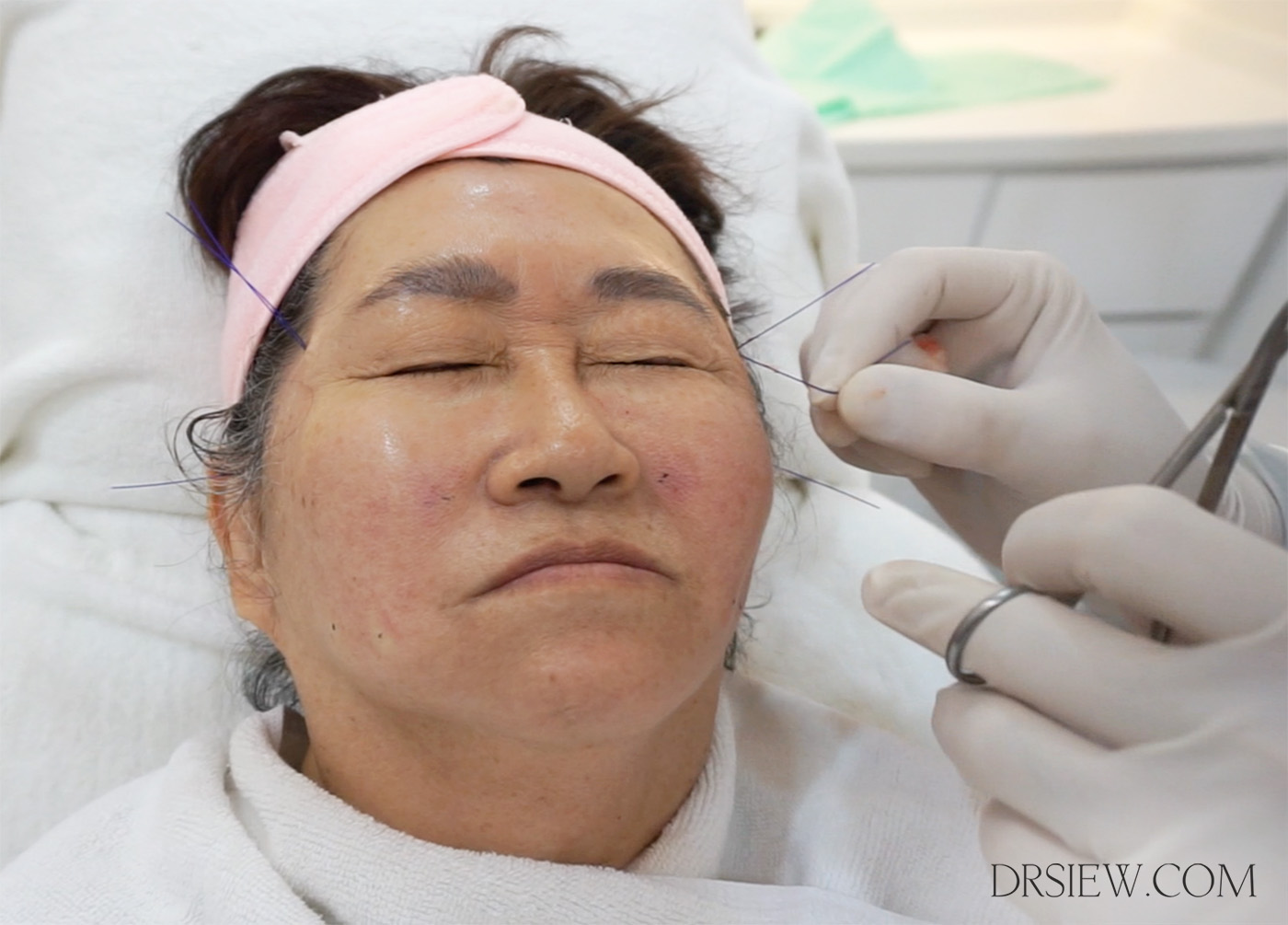
People often brace themselves for something complicated and then leave surprised at how quick and simple it was. There are two main methods we use at Imperial Clinic and the right one depends entirely on your specific mole.
is the more thorough of the two. The area gets numbed, the mole is cut out completely using a scalpel, and the wound is closed with a few small stitches. It sounds more involved than it is. The whole thing takes a matter of minutes. This method removes the mole all the way down through the deeper skin layers, which is important when the tissue needs to be sent for pathology testing to confirm it's benign. Stitches come out at a follow-up appointment, usually around seven to fourteen days later depending on where the mole is.
works differently and is better suited to raised moles that have already been confirmed as benign. Rather than cutting down through all the layers, the mole is shaved off flush with the skin surface. No stitches needed, faster healing, and a very clean result. The trade-off is that it doesn't go as deep, so it's not the right method when full tissue removal is needed. Your doctor will look at your mole and tell you clearly which method is appropriate and why. You won't be pushed into anything without understanding the reasoning behind it.
Most people expect mole removal to be a long or uncomfortable process, but it’s usually quick and straightforward.
Your doctor will first examine the mole, ask a few questions, and explain the best options for you. If you go ahead, the area is cleaned and numbed with local anaesthetic. The injection stings briefly, but after that you generally won’t feel the removal itself.
The procedure only takes a few minutes. Aftercare is explained, a dressing is applied, and most people are finished within about 45 minutes including consultation. Many patients are surprised by how simple and comfortable the process actually is.
The local anaesthetic injection is the sharpest moment and it lasts maybe five seconds. Once the area is numb, which happens quickly, you won’t feel the removal itself. Some people describe a vague sense of pressure or awareness during the procedure but actual pain isn’t really part of the experience.
After you leave, once the anaesthetic wears off, the area will be tender and a bit sore for a couple of days. It feels like a small wound healing because that’s exactly what it is. Paracetamol handles it easily and most people find they barely think about it after the first day.
The worry beforehand is almost always worse than the thing itself. That’s not something we say to be reassuring, it’s genuinely what patients tell us after every time.
Recovery is usually simple and most people return to normal activities the same day.
If stitches are used, keep the area clean and dry, avoid swimming or soaking, and return for stitch removal as advised by your doctor.
If it’s shave removal, no stitches are needed. A small scab forms and heals naturally within 1–2 weeks. Don’t pick at it.
Use SPF 50 daily on the area to prevent pigmentation, especially in strong sun conditions.
Scarring is usually minimal for small moles and fades over time, though larger ones may leave a more visible mark initially.
We take mole removal seriously.
Unlike skin tags, moles should never be removed at home because you cannot accurately assess whether they are completely harmless or need further examination.
If a mole is removed without proper medical evaluation, the tissue is lost, which can prevent important analysis.
There are also real risks such as infection, scarring, and incomplete removal since moles often extend deeper into the skin.
Professional removal is quick, safe, and allows proper assessment before anything is done. It’s a simple procedure in clinic, and the risks of DIY removal are not worth taking.
Imperial Clinic is a medical clinic, and mole removal here is always performed by an LCP-certified doctor.
This matters because a doctor first examines the mole, decides the safest and most appropriate removal method, and can send tissue for lab analysis if needed. In some cases, a doctor may even advise against immediate removal if further assessment is required.
We’ve also seen patients who previously had moles removed elsewhere without proper medical evaluation, sometimes resulting in scarring or missed concerns that should have been checked first.
Our mole removal clinic in KL focuses on safety, proper diagnosis, and simple, effective treatment—without unnecessary risk or complications.
Suitable for raised moles. Quick removal with minimal downtime and a smooth healing process.
Recommended for deeper or larger moles. Removes the mole completely with precise closure.
Convenient treatment option for removing several moles in a single session.
Lab testing available when further examination of the removed mole is recommended.
These are starting figures. What you actually pay depends on the size of the mole, its location, which removal method is appropriate, and whether pathology testing is needed. We’ll go through the exact cost after the assessment, before anything starts. No surprises.

Whether it’s a mole that’s been quietly bothering you for years, one that’s started changing recently, or one that catches on something every single day and you’re just done with it, come in and let us have a proper look.
We’ll tell you honestly what we see, what we recommend, and what it’s going to cost. If you want to go ahead the same day, in most cases we can make that happen.
It’s quick, it’s done properly, and almost every single person who comes in tells us they wish they’d stopped putting it off sooner. You probably will too.
If the mole is fully excised, the answer is no. It won’t come back in the same spot because the cells that formed it have been completely removed.
Shave excision is a bit different because it doesn’t go all the way down through the deeper layers. In some cases a slight shadow or faint pigmentation can reappear over time at the site. It’s not the mole growing back in the true sense but there can be some residual colour. Your doctor will explain this clearly if shave excision is the recommended approach for your mole.
New moles can still develop elsewhere on your skin as you age. That’s completely normal and unrelated to any mole that’s been removed.
Yes, when a doctor assesses and removes it properly. The assessment is what makes it safe because that's the step where we decide whether removal is appropriate and which method is right for your mole.
The anaesthetic injection stings for a few seconds. After that you won't feel the removal. Some tenderness for a couple of days afterwards is normal and paracetamol handles it easily.
Most people are done within 30 to 45 minutes including the consultation.
There will be some kind of mark initially. Small moles removed cleanly tend to leave a faint line that fades well over time. Your doctor will be upfront about what to expect for your specific mole before starting.
Often yes, depending on the number and locations involved. We'll let you know after seeing what you've got.
When there's clinical reason to, yes. Your doctor will advise whether this is recommended in your case
Come in. That's exactly the right reason to book an appointment. We look at it properly and tell you honestly what we think.
Just wear clothing that gives easy access to the area being treated. No fasting, no special preparation required.

Monday – Saturday
10:00 Am – 10:00Pm